ANNOUNCEMENT (February 13, 2012)

Define The Line (DTL) awarded Facebook’s Digital Citizenship Research Grant

We are very happy to report that we were one of four international applicants selected for Facebook’s Digital Citizenship Research Grant. This grant will provide critical support to our pioneering research work on cyberbullying and digital citizenship. We look forward to working alongside Facebook and the other awardees of the grant: Education Development Center (EDC), Society for Information Technology and Teacher Education (SITE) and European Schoolnet (EUN). We would also like to thank Senator Ataullahjan for her generous words of support for our research work.

STATEMENT BY SENATOR ATAULLAHJAN REGARDING DR. SHAHEEN SHARIFF, FACEBOOK DIGITAL CITIZENSHIP GRANT RECIPIENT
Date: February 13, 2012


I offer my sincere congratulations to Dr. Shaheen Shariff and her team at McGill University for being awarded the Facebook Digital Citizenship Grant for the Define the Line initiative. Out of nearly 100 grant applications from more than 10 countries, Dr. Shariff’s Define the Line project, based on her pioneering research in media and technology, truly embodies the spirit of socially responsible digital citizenship.

This comes at a crucial time in Canada and the world, when more and more children are participating in social media.   Define the Line seeks to understand how youth conceptualize public and private spaces, and their associated risks – “a balance between online free expression, safety, privacy, supervision and regulation.”

In Canada, the Senate Standing Committee on Human Rights is similarly committed to issues affecting youth, where at this moment we are studying cyberbullying as an issue of child protection. While we recognize that the social and educational opportunities that come with social media are momentous, the negative consequences of being online mean that we have an onus to teach our children the responsibility of digital citizenship.

I commend Facebook for taking the responsibility upon itself and leading this initiative; supporting world-class research to understand the challenges and opportunities of our children growing up in a world of media and technology. Initiatives such as the Digital Citizenship Research Grant are imperative in an increasingly social world.

Congratulations again to Dr. Shaheen Shariff and her colleagues at McGill University. As a fellow Canadian, I am proud that you are upholding our nation’s vision of rights and responsibilities in the (digital) world.
 

About Define the Line (DTL)

Welcome to Definetheline.ca
Clarifying the Blurred Lines between Cyberbullying and Socially Responsible Digital Citizenship.

DTL is a research program based at McGill University and comprised of a team of graduate and post graduate students who conduct research, undertake extensive reviews and analysis of emerging and established laws, policies and studies on cyberbullying. The principal investigator of this research and leader of this team is Professor Shaheen Shariff who has written extensively on the subject of cyberbullying over the past decade.

Our work at DTL addresses the emerging policy vacuum on legal and ethical limits of on-line expression, such as the line between joking and cyber-threats; fair use; privacy rights and privacy harm, cyber-safety, cyber-libel; and school supervision. Our aim is to share our research findings and expertise with policy-makers, teachers, parents, and the youth in user-friendly ways that will help all stakeholders engage and learn about cyberbullying with the view to better understand cyberbullying and thereby develop better policies and educational programmes that will contribute towards reducing the occurrences of cyberbullying. 

Our research identifies and helps stakeholders to:

  • Define the line at which joking can become criminal harassment and demeaning photographs or modified images posted on social media can ruin a peer or teacher’s reputation and become cyber-libel;
  • Define the line at which private photographs or videos of a sexual or intimate nature cross the line to becoming possession or distribution of child pornography if they involve a minor and are distributed to others for a laugh.

We also endeavour to help

  • Define the role of parents and provide guidelines on how they can define the boundaries of on-line behaviour for their children;
  • Define the role of teachers and school administrators to intervene when the expression occurs on private computers outside of school hours and off school property.

In subsequent sections on this website you will find resources for each of our stakeholders (parents, teachers, policy makers, kids and teens). Please note, our kids and teens pages are currently under development. You will find references to case law, analysis of emerging policy and information on cyberbullying and video vignettes that relay messages of online safety for young people. 

We believe in partnerships and regularly invite input from psychologists, legal practitioners, academics, judges, educational policy makers and families through video-blogs, interviews, research studies and publications to mobilize knowledge and address the existing policy vacuum relating to cyberbullying. Whether you are a fellow academic organization, a school, a community group or an NGO, we would love to hear from you.

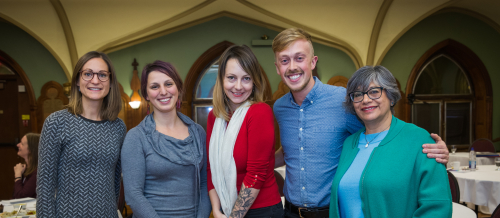
DTL team